
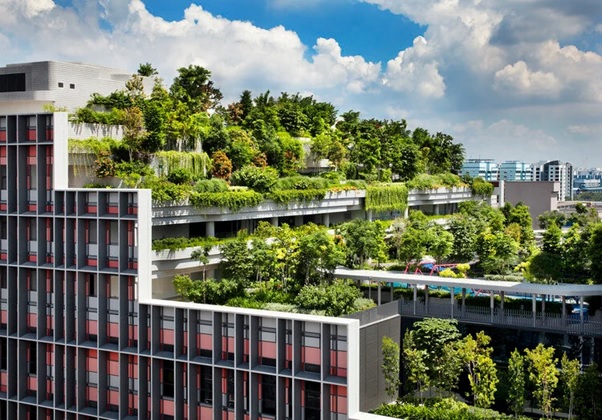
Net Zero Emission (NZE) 2060 is Indonesia’s target to balance the amount of greenhouse gas emissions released with the amount reabsorbed, ensuring there is no net increase in emissions by 2060. Housing development plays a crucial role in this effort, as continuous construction contributes significantly to emissions. Rapid urban growth has driven an increasing demand for housing. Without changes to design and policy, housing development could actually increase the carbon footprint and hinder the achievement of Indonesia’s climate targets.
This commitment was reaffirmed by the Ministry of Public Works during the “Sustainable Housing, Buildings, and Cities” seminar in Jakarta on January 14, 2025. The government is promoting the implementation of Green Buildings (BGH) and Smart Buildings (BGC) by engaging various stakeholders, including the government, the private sector, and the public. Future housing is expected not only to meet residential needs but also to be climate-adaptive, energy-efficient, and low-emission.
Global data indicates that the building sector accounts for approximately 37–39% of energy-related CO₂ emissions, with 28% stemming from operations and 7–11% from materials and construction. In Indonesia, the residential sector generates emissions approximately 80% higher than the commercial sector (GBCI, 2022) due to the large number of units and household energy consumption. With 72.8% of the population projected to live in urban areas by 2045, reforming the building sector has become urgent, aligning with the target to reduce emissions by 31.89–43.20% by 2030 under the Enhanced NDC scheme.
As a legal foundation, the government has issued Government Regulation (PP) No. 16 of 2021 and the Regulation of the Minister of Public Works and Public Housing (Permen PUPR) No. …Regulation No. 21 of 2021 concerning Green Building Performance Assessment, which governs adaptive design, site management, and the use of energy-efficient and environmentally responsive technologies. The implementation of this concept is evident in the construction of vertical housing in the Nusantara Capital City (IKN), utilizing a “Vertical Smart Building” approach.
Beyond regulations, circular economy principles are being applied to affordable housing projects. The use of over 2.2 million kilograms of recycled plastic in construction has reduced CO₂e emissions by approximately 2,741 metric tons and created job opportunities within the green manufacturing sector. These findings demonstrate that sustainable housing can deliver both environmental and socio-economic benefits.
While challenges remain—ranging from reliance on fossil fuels and the high initial costs of green technology to the readiness of the low-carbon materials industry—these obstacles also present opportunities to strengthen policies, technical capacity, and cross-sector collaboration. Low-emission buildings must evolve into an inclusive national construction standard. This transformation represents a strategic step toward creating healthy, efficient, and equitable cities as part of the journey to achieve Net Zero Emissions by 2060. (NCa)
Sumber:
Kementerian Pekerjaan Umum. (2025). Wujudkan Hunian yang Berkelanjutan, Kementerian PU Dorong Penerapan Bangunan Gedung Hijau. Sahabat PU
Wibowo, S. (2024). Democratizing Sustainable Housing in Indonesia: A Case for Asia’s ESG Priorities. ESG Business.
World Energy Outlook 2025