
As a premier tourist destination in Indonesia, the city of Yogyakarta offers not only cultural and historical beauty but also faces significant challenges regarding waste management. Waste issues represent a serious problem requiring immediate attention from all stakeholders; if left to accumulate, waste can give rise to a host of new problems for the community. Waste is defined as the residue of human activities or natural processes that is no longer useful; it can be solid or semi-solid, organic or inorganic, and either biodegradable or non-biodegradable (Azmi, 2024).
As the population grows, waste generation continues to rise, potentially becoming a major issue if not managed correctly. According to the National Waste Management Information System (SIPSN), the total waste generation in the Special Region of Yogyakarta in 2024 reached 702,140.01 tons per year, equivalent to 1,923.67 tons per day. Between 2022 and 2023, the volume of waste generated saw a significant increase—reaching approximately 690,000 tons and 710,000 tons respectively—driven by rising community activity. However, in 2024, waste generation declined to approximately 590,000 tons.
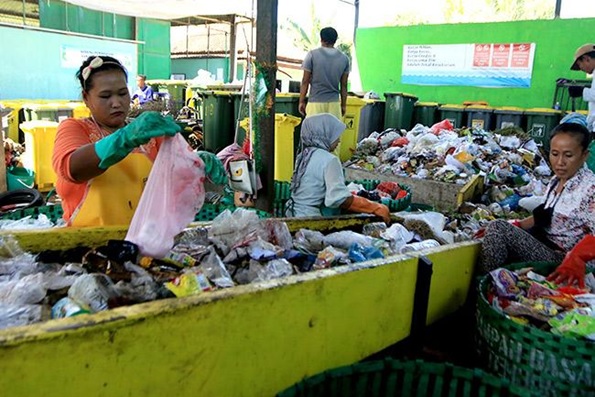
To raise public awareness regarding waste management and reduce the volume of waste circulating in Yogyakarta City, the Yogyakarta City Environmental Agency (DLH), in collaboration with the Yogyakarta City Waste Bank Forum (FBS), launched the “MAS JOS” program (*Masyarakat Jogja Olah Sampah*—Yogyakarta Community Waste Processing). This initiative aims to foster community participation in source-based waste management, starting at the household level. The program encourages residents to sort waste by type, send inorganic waste to waste banks, process organic waste, minimize food waste, and use reusable containers to reduce single-use waste. The program encompasses 45 urban villages (*kelurahan*) across Yogyakarta City. Each urban village is expected to reduce waste by 1.2 tons daily, resulting in a total daily reduction of approximately 6 to 7 tons.
Urban waste management is a crucial element in creating healthier and more sustainable cities, aligning with SDG 11 (“Sustainable Cities and Communities”) and SDG 12 (“Responsible Consumption and Production”). Sustainable waste management entails a series of actions aimed at mitigating environmental impacts and enhancing the community’s quality of life. Public involvement is vital, as the waste issue cannot be resolved by relying solely on the government. While the government plays a key role in establishing regulations, facilities, and management systems, these measures cannot function effectively without active community participation. The public stands at the forefront of this effort, given that waste originates from the daily activities of households, schools, businesses, and public spaces.
By fostering an awareness of waste segregation at the source, reducing single-use plastic consumption, and supporting initiatives such as waste banks, the volume of waste sent to landfills can be significantly curtailed. Furthermore, community participation generates added value—for instance, through recycling processes that yield economically valuable products. Thus, collaboration between the government and the community is essential: the government provides the systems and policies, while the community carries out tangible actions in their daily lives. (DYu)
Referensi
Dinas Lingkungan Hidup Kota Yogyakarta. (2025, Agustus 8). Kota Yogyakarta Serentak “Mas JOS” (Masyarakat Jogja Olah Sampah). Retrieved Agustus 18, 2025, from https://lingkunganhidup.jogjakota.go.id/detail/index/453
Kementerian Lingkungan Hidup dan Kehutanan Republik Indonesia. (2024). Sistem Informasi Pengelolaan Sampah Nasional (SIPSN): Timbulan Sampah Daerah Istimewa Yogyakarta Tahun 2024. Retrieved Agustus 18, 2025, from https://sipsn.menlhk.go.id/sipsn/public/data/timbulan